Is EarnKaro Safe to Use? A Simple Guide to Profit Status and Payouts
Wiki Article
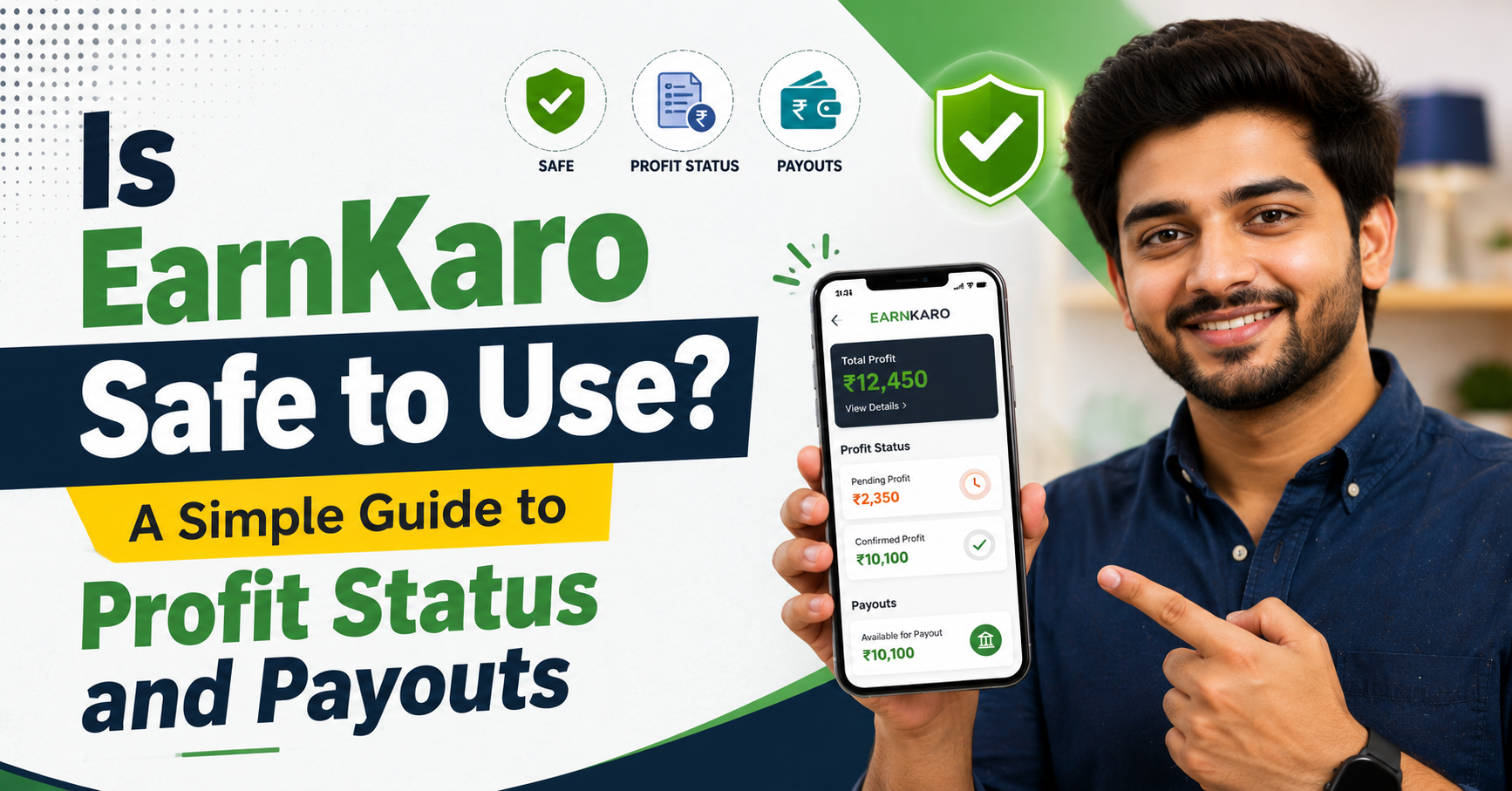
Many Indian users ask is EarnKaro safe because the platform uses terms like pending profit, confirmed profit, profit links, and payout requests, which can feel confusing at first. That question is fair. Any platform connected with referrals, tracking, and bank transfers should be understood properly before users depend on it. EarnKaro is an affiliate-style deal-sharing platform where users create product links, share them, and may receive profit when a valid purchase happens through those links. The safer way to look at it is not with excitement, but with a clear checklist: how tracking works, when profit becomes confirmed, how payouts are handled, and what users should avoid.
EarnKaro’s own FAQ says that only confirmed profit can be paid, while pending profit cannot be paid until its status changes to confirmed. It also says payments can be sent to an Indian bank account through NEFT, and the transfer may take around 4 to 5 business days depending on the bank.
How EarnKaro Works
EarnKaro works through affiliate tracking. In simple words, a user creates a link for a product or offer from a partner retailer. When someone opens that link and completes a valid purchase, the retailer’s system tracks the order. If the order meets the required conditions, the platform may show profit in the user’s account.
This is where many beginners get confused. A tracked order does not always mean money is ready to withdraw. First, the platform has to wait for retailer confirmation. The order may still be returned, cancelled, replaced, or rejected if it does not meet the partner’s conditions. That is why the first status is usually pending, not confirmed.
EarnKaro’s help page explains that profit tracking for most retailers usually takes around 24 to 72 hours. It also notes that pending profit may get confirmed within 60 to 90 days once the retailer shares the report and confirms that the order was successfully delivered. Returned, replaced, or cancelled orders can lead to profit cancellation.
So, when users see pending profit, it is not necessarily a problem. It is part of the verification cycle. The platform has to wait for the retailer’s final update before that amount becomes withdrawable.
For a beginner, this EarnKaro profit status guide can be understood in one simple way: pending means “tracked but not final,” while confirmed means “approved and eligible for payout,” assuming the account also meets the payout requirements.
Pending Profit vs Confirmed Profit
Pending profit is the amount shown after a transaction is tracked but before the retailer confirms it as valid. This status is common in affiliate platforms because the final approval depends on the retailer, not only on the user or the sharing platform.
For example, if someone buys a product through a shared link but later cancels the order, the pending amount may not become confirmed. If the product is returned, exchanged, or if the transaction does not meet the retailer’s qualifying rules, the profit may be adjusted or cancelled. That may feel frustrating, but it is a normal part of affiliate tracking.
Confirmed profit is different. This is the amount that has passed the retailer’s validation process. Once profit becomes confirmed, users can usually move toward payout, subject to the platform’s minimum withdrawal and account requirements.
EarnKaro’s terms mention that it may withhold or adjust pending profit if transactions do not meet qualifying transaction criteria, if tracking does not happen through the retailer’s affiliate system, or if fraudulent activity is detected. This is why users should avoid self-referral tricks, fake orders, misleading sharing methods, or repeated attempts to manipulate tracking. It can affect account trust and payout eligibility.
Platform Overview, Features, and Access
EarnKaro is mainly built for deal-sharing and affiliate-style recommendations. Users can access the platform through its website or mobile app, create links, share them with their audience, friends, or community, and track profit status inside the account.
The key feature is the profit link. This is the trackable link connected to a product or store. If a user shares a normal product link instead of an EarnKaro-generated link, the transaction may not track. Another common issue is opening the link in a retailer app instead of the browser flow required for tracking. EarnKaro’s help content specifically notes that profit may not track if the EarnKaro profit link is opened on the retailer app, and users should complete the transaction from the retailer’s browser site where required.
Inside the account, users can check total profit, pending profit, confirmed profit, and confirmation dates. EarnKaro’s help page says users can go to the “My Earnings” section to track confirmed and pending profits by month.
For payout access, EarnKaro’s support page says users can request profit payment from the “My Earnings” section and enter bank details. It also notes that users will only see the option to enter bank details when confirmed profit is ₹10 or more.
These details matter because many payout concerns come from misunderstanding the timeline. Pending profit is not withdrawable. Confirmed profit is the figure users should focus on when checking payout eligibility.
Safety and Legality in India
From a user-safety angle, EarnKaro should be understood as an affiliate and deal-sharing platform, not as a guaranteed income system. The safer expectation is this: users may receive profit when valid transactions are tracked, approved, and confirmed by the partner retailer. Nothing should be treated as automatic until the status changes.
In India, affiliate marketing is generally part of digital commerce and online promotion. The legal and compliance concerns are usually around truthful promotion, fair disclosure, data privacy, consumer protection, and platform terms. Users sharing links publicly should avoid misleading claims. If a post contains a commercial recommendation or a benefit connected to a link, it is better to be transparent with the audience.
India’s digital commerce environment also expects platforms and sellers to handle consumer information responsibly. The Consumer Protection, E-Commerce Rules, 2020 require e-commerce entities to follow transparency and consumer grievance-related obligations, including publishing certain business and grievance details. While every affiliate-sharing situation is not identical to operating a full e-commerce platform, the broader user principle remains the same: check transparency, understand terms, and avoid unclear claims.
Before relying on any payout platform, users should also look at a trusted regulatory information page or official consumer guidance if they are unsure about rights, grievance options, or digital commerce obligations in India.
The safest position is neutral. EarnKaro can be used by people who understand the process, follow platform rules, and do not treat pending numbers as guaranteed payout. At the same time, users should read the latest terms, keep records of transactions, and avoid depending on estimated profit before confirmation.
Tips for Users and Best Practices
The first best practice is to understand the status labels before worrying about payout. Pending profit means the transaction is still under validation. Confirmed profit means the amount has passed the approval stage and may be eligible for withdrawal.
The second tip is to follow the correct tracking flow. Use the generated profit link. Avoid changing the link. Do not assume that a purchase will track if the user opens the product directly through another app, another browser session, or a different source.
The third tip is to avoid overpromising when sharing links. If you are recommending a product, keep your wording honest. Mention features, price, offer details, and source clearly. Do not make claims that are not visible on the retailer’s page.
The fourth tip is to keep screenshots or records of important activity. Save order details, shared links, dates, and platform updates where relevant. This helps if you need to understand why a transaction stayed pending or did not confirm.
The fifth tip is to protect your account. Use your own phone number and bank details. Do not share OTPs. Do not let others operate your payout account. If someone promises to “fix” pending profit through unofficial methods, avoid it. That can create more risk than benefit.
Finally, check the platform’s latest payment rules before requesting a payout. Minimum payout amounts, processing timelines, and verification steps can change over time. The latest official help page should always be treated as the main reference.
Conclusion
So, is EarnKaro safe to use? A balanced answer is that it can be a legitimate deal-sharing and affiliate platform for users who understand how pending profit, confirmed profit, and payout rules work. The important thing is not to confuse tracked profit with withdrawable profit.
Pending profit needs retailer validation. Confirmed profit is the amount users should check for payout. Users should follow the correct link-sharing process, avoid misleading promotions, protect their account details, and read official terms before depending on any payout.
For a trusted brand-style website, the right message is simple: EarnKaro should be approached with clear expectations, careful tracking habits, and responsible digital behavior, not hype.
Report this wiki page